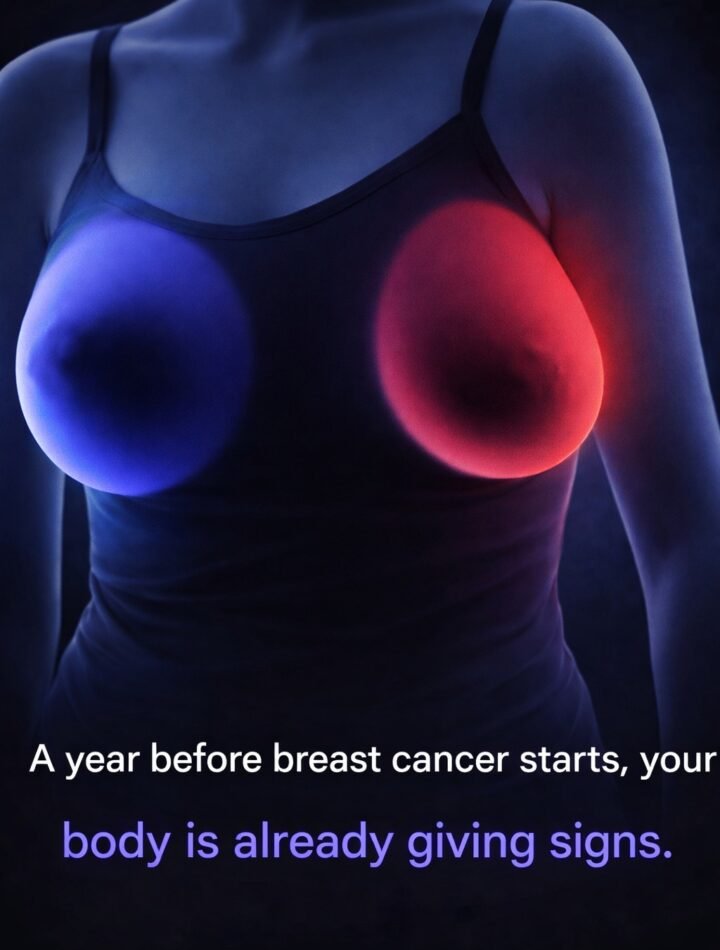
Breast cancer can cause visible changes—even without pain.
👉 Watch for:
- One breast becoming larger or swollen
- Unusual asymmetry (more than normal)
- A sudden change in contour
👉 These changes may be subtle at first but noticeable over time.
Your body’s signal:
Internal tissue changes may be affecting the outer shape.
Step 3: Skin Changes (Dimpling, Redness, Texture)
The skin on the breast can reveal early warning signs.
👉 Look for:
- Dimpling (skin looks like orange peel)
- Redness or irritation
- Thickened skin
👉 This happens when underlying tissue pulls on the skin.
Your body’s signal:
Possible structural changes beneath the surface.
Step 4: Nipple Changes or Discharge
Changes in the nipple can be an early clue.
👉 Be alert to:
- Nipple turning inward (inversion)
- Unusual discharge (especially bloody or clear)
- Pain or scaling around the nipple
👉 These symptoms should never be ignored.
Your body’s signal:
Something may be affecting the ducts or surrounding tissue.
When Should You See a Doctor?
👉 Immediately consult a healthcare professional if you notice:
- Any new lump
- Persistent changes in shape or skin
- Nipple discharge or inversion
Early evaluation can make a huge difference in outcomes.
Final Thoughts
Most breast changes are not cancer, but ignoring signs can delay diagnosis.
👉 The key is simple:
Know your body. Notice changes. Act early.
Quick Reminder
- Do regular self-checks
- Schedule routine screenings
- Don’t panic—but don’t ignore symptoms