A simple message… but a powerful one.
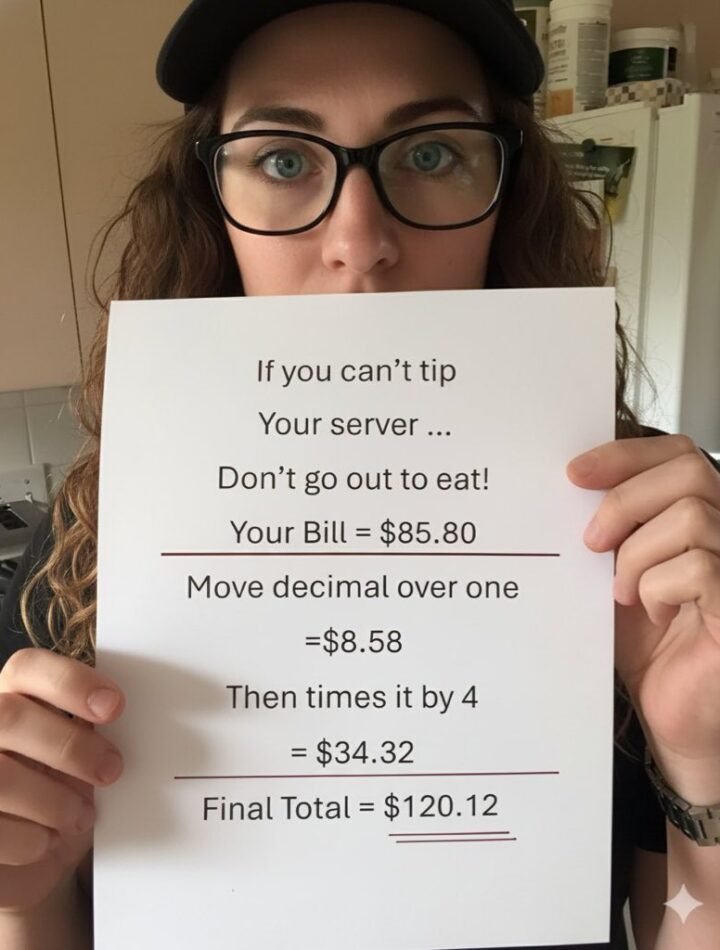
The image lays it out clearly:
👉 An $85.80 bill
👉 A suggested method to calculate tip
👉 A final total of $120.12
And right at the top, the statement that sparks debate everywhere:
“If you can’t tip your server… don’t go out to eat.”
🍽️ The Reality Behind the Message
For many restaurant workers, tips aren’t just “extra”—they’re a major part of their income.
In some places, servers:
- Earn lower base wages
- Rely heavily on tips to make a living
- Work long hours on their feet
So from their perspective, tipping isn’t optional—it’s respect for the service provided.
💭 Why Some People Agree
A lot of people stand firmly behind this idea:
- If you can afford to eat out, you can afford to tip
- Service workers deserve fair compensation
- Tipping is part of dining culture in many countries
For them, not tipping feels like ignoring someone’s effort.
⚖️ Why Others Disagree
But not everyone sees it the same way.
Some argue:
- Tipping shouldn’t be mandatory
- Employers should pay workers properly
- Customers shouldn’t feel pressured or judged
To them, the system itself feels unfair—not the customer.
🔢 About That Calculation…
The method shown:
- Move decimal → $8.58 (10%)
- Multiply by 4 → $34.32 (40% tip)
That’s a very generous tip, much higher than the usual 15–20%.
👉 Which raises another question:
Is tipping becoming an expectation… or even pressure?
🔥 The Bigger Conversation
This isn’t just about money.
It’s about:
- Respect
- Fair wages
- Social expectations
And everyone has a different line.
🤔 Be Honest…
If your bill was $85.80…
👉 Are you tipping $10?
👉 $15–$20?
👉 Or going all the way to $34 like the image suggests?
💬 Final Thought
Tipping is one of those topics where there’s no single right answer—only perspectives shaped by experience.
But one thing is certain:
👉 This conversation isn’t going away anytime soon.